Share:

Please enter a valid location
High-Quality Cotton Fiber Offers U.S. Producers a Competitive Advantage in Emerging Markets

Summary:
U.S. cotton producers can gain a competitive advantage in the global cotton market by producing high-quality fiber that meets the demand of cotton spinners, clothing manufacturers and consumer preferences. Experts explain how excellent fiber quality can unlock new markets for U.S. cotton, and producers from Georgia and Texas share how they’ve received fiber quality premiums with PhytoGen® cottonseed.
Key Takeaways:
- Growing cotton markets in countries such as Pakistan, Vietnam, Turkey and Mexico present new opportunities for high-quality U.S. cotton.
- High-quality fiber is necessary to create cotton apparel that will win back consumer demand versus synthetic fibers.
- PhytoGen cottonseed has invested in a state-of-the-art R&D and breeding program to develop cotton varieties with excellent fiber quality.
- On-farm performance and university trials confirm the excellent fiber quality potential of PhytoGen® brand Upland varieties, with staple lengths as high as 41.6 and premium loan values as high as 57 cents.
The Opportunity: Growing Markets and Consumer Preferences Demand Quality Cotton
As U.S. cotton producers look for a competitive advantage to sell their lint in an ever-changing global textile market, fiber quality is a key that could help unlock increased demand for U.S. cotton and better return on investment for American farmers.
To help growers maximize market access and profitability, PhytoGen® cottonseed is focused on breeding varieties with consistent high-quality fiber, combined with high-yield potential, that growers need to break through a challenging farm economy.
Global markets are changing for U.S. cotton. China has consistently been the largest importer of U.S. cotton, but new opportunities to sell cotton to countries such as Pakistan, Vietnam, Turkey and Mexico have created growth markets. As demand for high-quality cotton rises in these countries, U.S. growers are competing with other cotton-exporters – namely Brazil and Australia – to supply spinning mills with the cotton they need. With these shifts in the cotton market, it’s more important than ever for U.S. farmers to differentiate themselves from other cotton-exporting countries by offering high-quality fiber.
Buddy Allen, president and CEO of the American Cotton Shippers, said excellent fiber quality has always been a distinguishing feature of U.S. cotton, and it will be even more critical as U.S. producers compete in emerging markets.

“Cotton needs to regain a bigger presence on the retail shelf, and we need consumers to buy U.S. cotton,” Allen said. “That will require a larger demand for high-quality cotton, and we need to take a comprehensive approach to provide growers with the tools they need, including cottonseed, to produce high-quality cotton and be economically viable as they do it.”
Meeting the Demand: Fiber Quality Begins with Breeding
Developing cotton varieties with high-yield potential and excellent fiber quality takes a concerted effort that begins with breeding. Joel Faircloth, Ph.D., Corteva Portfolio Leader – Cotton, said the PhytoGen breeding team is committed to developing new products that bring together yield and quality, while continuing to lead the industry with agronomic traits that provide stability and consistency.

Cameron Oliver is a PhytoGen field agronomist in the Lubbock area who helps customers select and manage varieties on their farms. He previously worked as a field research biologist at the Lubbock R&D facility, focused on breeding cotton varieties with high-quality fiber. Oliver said the emphasis on exceptional fiber quality in the PhytoGen breeding program comes at a time when fiber quality is vital to the success of U.S. cotton producers. It’s a recurring topic in his conversations with growers.

“In one way, high-quality fiber is a defensive trait against discounts and deducts,” Oliver said. “In a really hot, dry year, a cotton variety that typically produces average quality may end up in the discount range, but if you plant a cotton variety with higher-quality fiber, you may avoid the deduct. Varieties bred for high-quality fiber help with income stability, year over year, in a very similar way that native traits help with yield stability.”
Official Variety Trials and On-Farm Results
PhytoGen® brand Upland varieties have long been known for exceptional fiber quality, and the continued focus to breed high-quality fiber is paying off across the Cotton Belt, with extraordinary results in the 2025 university cotton trials.
In the 2025 Mississippi State University (MSU) On-Farm Cotton Variety Demonstrations, PhytoGen® brand PHY 433 W3FE had the longest staple and highest uniformity, beating out Deltapine and other cottonseed brands. Its fiber length was especially impressive at 1.24 inches, or a 39.68 staple.1 PHY 433 W3FE also had the top strength in the trial, tying PhytoGen® brand PHY 357 W3FE with a 33.5 g/tex rating.
PHY 433 W3FE also had the longest staple and highest strength among all commercial varieties in both the 2025 MSU Official Variety Trials and the 2025 University of Georgia irrigated OVT locations.2, 3
Some of the most remarkable results came from the 2025 Louisiana State University Tensas Parish Core Block trial where PHY 433 W3FE had an incredible 41.6 staple and 35 strength, while PhytoGen® brand PHY 357 W3FE had an excellent 38.4 staple and 36.2 strength.4
Faircloth said these third-party results with the latest PhytoGen brand varieties validate the increased focus of the PhytoGen breeding program on high-quality fiber. More importantly, these varieties are often also taking the top spots in the yield results.
“We’re not breeding for an either-or when it comes to yield and fiber quality – we must provide U.S. cotton growers with both so they can remain economically profitable and produce the fiber quality that’s in demand from spinning mills,” Faircloth said. “PhytoGen has always been a leader in fiber quality, beginning with our roots in Pima cotton, and we are committed to helping our customers produce the top fiber quality on the world market.”
Customers Earn Premiums with PhytoGen Brand Varieties
Third-party university trials provide objective evidence of the consistent high-quality fiber PhytoGen customers have long observed on their farms. In Texas, Wharton County producer Josh Marek has planted PhytoGen brand varieties for nearly two decades, reliably producing high-quality fiber and high yield potential. His results from 2025 season were particularly impressive, especially with the recently released PHY 357 W3FE.
“PHY 357 W3FE looks like it’s going to be a good variety for us. I was excited when I ran the picker through it. There was a lot of cotton in the field,” Marek said. “PHY 357 W3FE yielded 1,716 pounds per acre, and the grade was excellent with a 57 cent loan value.”
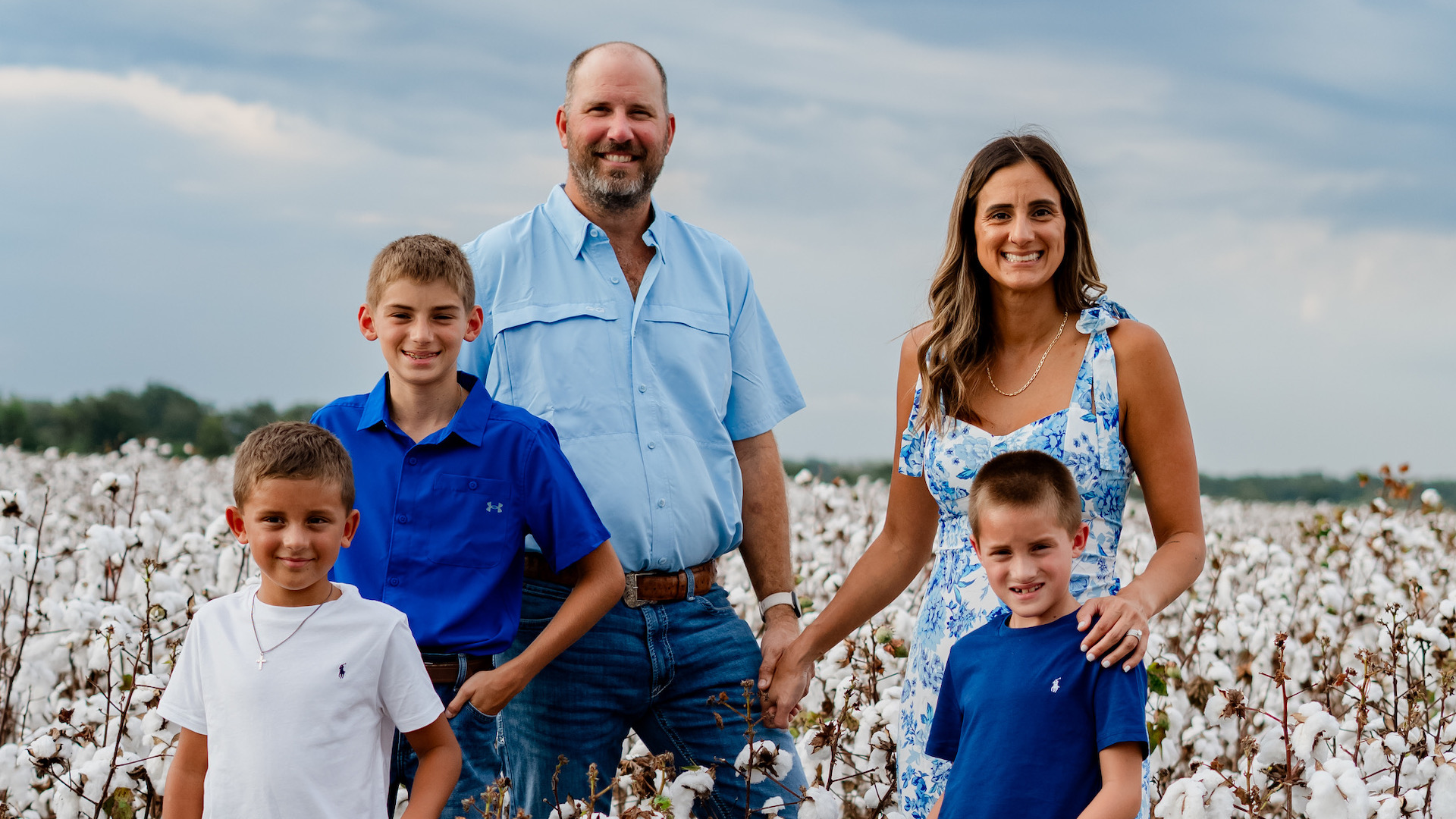
Josh Marek, cotton producer, and his family reside in Texas.
Marek said that excellent fiber quality makes his cotton more desirable to mills that require high-quality cotton, and he often earns premiums when he markets his cotton. That’s an added benefit that helps him pencil out a stronger return on investment.
“Fiber quality is important to us because it increases our return when we sell it. With our PhytoGen varieties, we are able to grow a longer staple, from 37 to 40, and combined with good color and strength, we pick up nice premiums on our cotton,” Marek said. “With good grades we can earn 3 to 4 cents more per pound for our cotton. It all adds up and helps our bottom line so much.”
Georgia producer and ginner John Ruark also relies on PhytoGen brand varieties for excellent fiber quality. He sees quality reports from different cotton varieties that come through his gin, and has noticed PhytoGen cottonseed consistently produces premium fiber length that can earn growers improved profit potential.
“You need the best fiber quality you can produce, and we’ve seen a longer staple with PhytoGen varieties,” Ruark said. “That premium adds up at the end of the season and makes a difference to our bottom line, especially with lower commodity prices.”

John Ruark, cotton producer, resides in Georgia.
Georgia growers need premium fiber quality combined with high yields, and they also need consistency across their farms. Ruark’s operation maintains consistent performance with PhytoGen brand varieties even in drought years, an experience shared by many of the growers who use his gin.
“I have a customer who planted three or four different PhytoGen varieties, and he averaged 1,300 to 1,350 pounds per acre with a 56.79 loan value,” Ruark said. “We had great yields and top grades with PhytoGen varieties last season. Everybody who plants PhytoGen in our area is really happy with the results.”

1Mississippi State University, 2025 On-Farm Cotton Variety Demonstration Program. Yield and fiber quality data pooled across all 13 locations.
2Mississippi State University, 2025 Official Variety Trials. One-year mean performance averaged across all (8) testing locations.
3University of Georgia, 2025 Peanut and Cotton Performance Tests. Tifton irrigated OVTs.
42026 Cotton Varieties for Louisiana, Variety Trials and On-Farm Demonstrations. Table 14. Lint yield, gin turnout, fiber characteristics, loan value and gross return per acre of cotton varieties grown, Tensas core block, 2025.